Description
Built with Questionnaire Builder 2
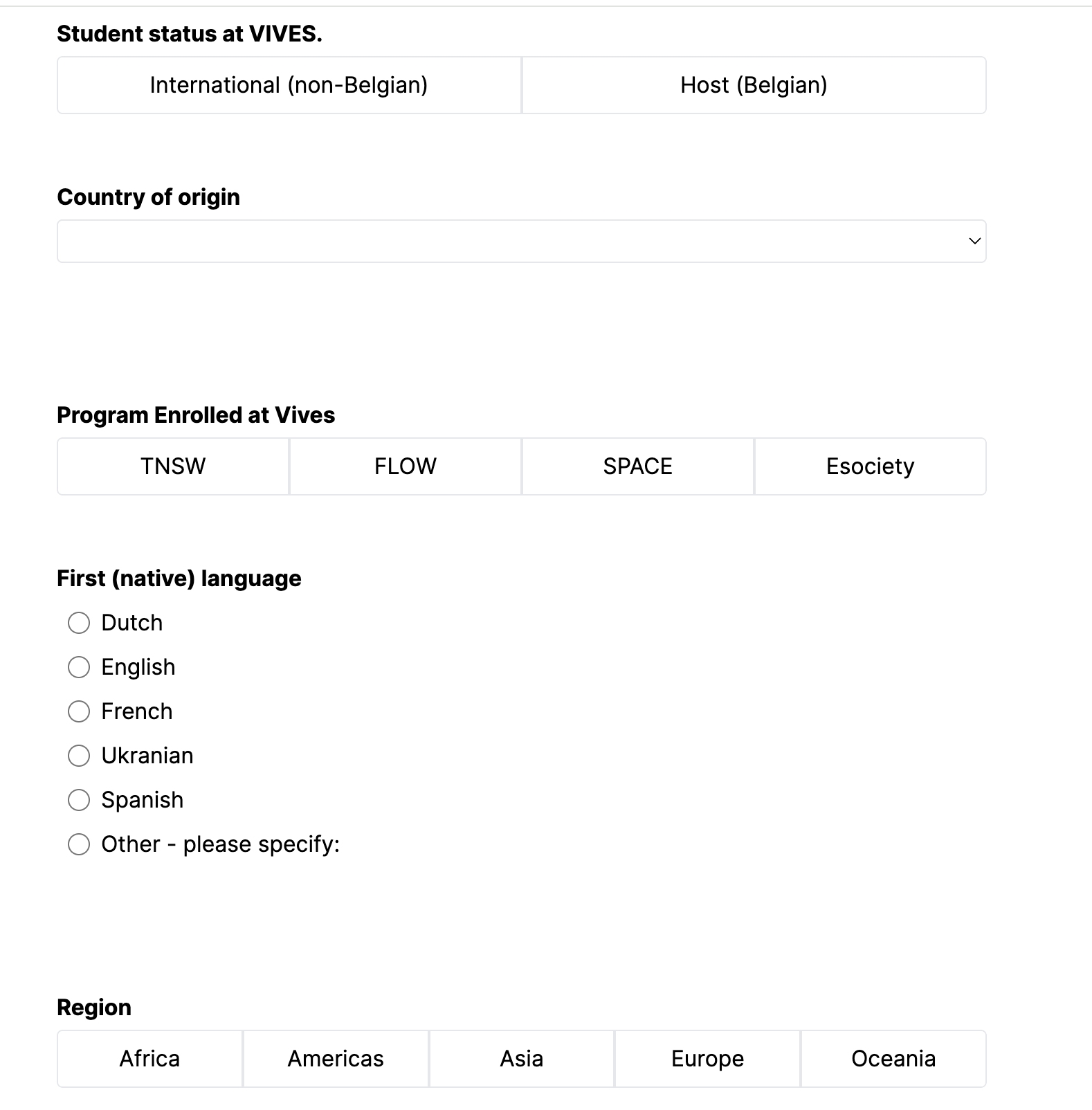
This section asks a few background questions e g age study programme language to help describe the sample and support fair pairing for the workshop Responses are confidential and used only for research purposes sensitive items include a Prefer not to say option Providing accurate answers helps interpret results e g whether outcomes vary by study stage or time at VIVES
Creative Commons Attribution-NonCommercial (CC BY-NC)
Built with Experiment
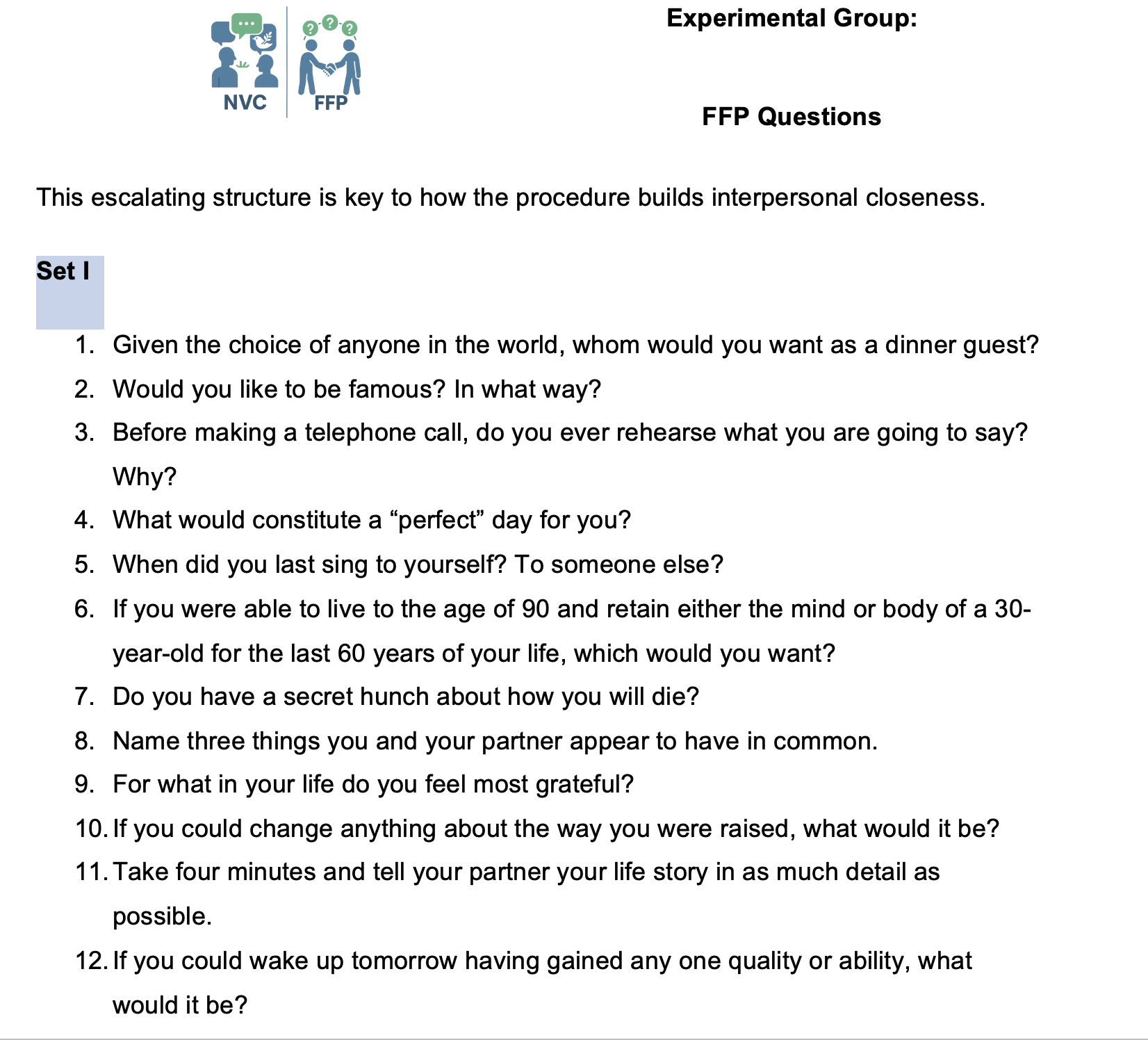
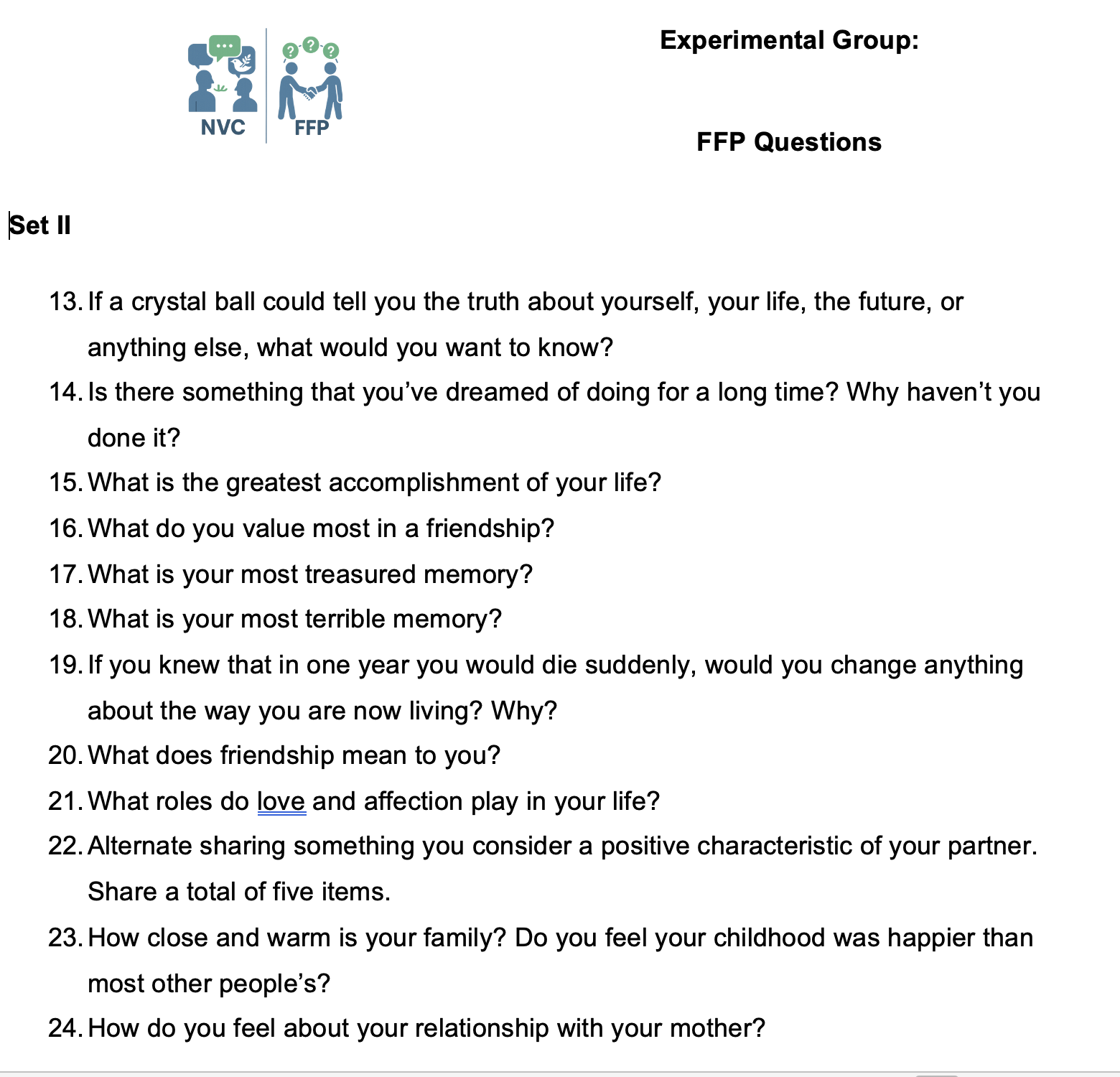
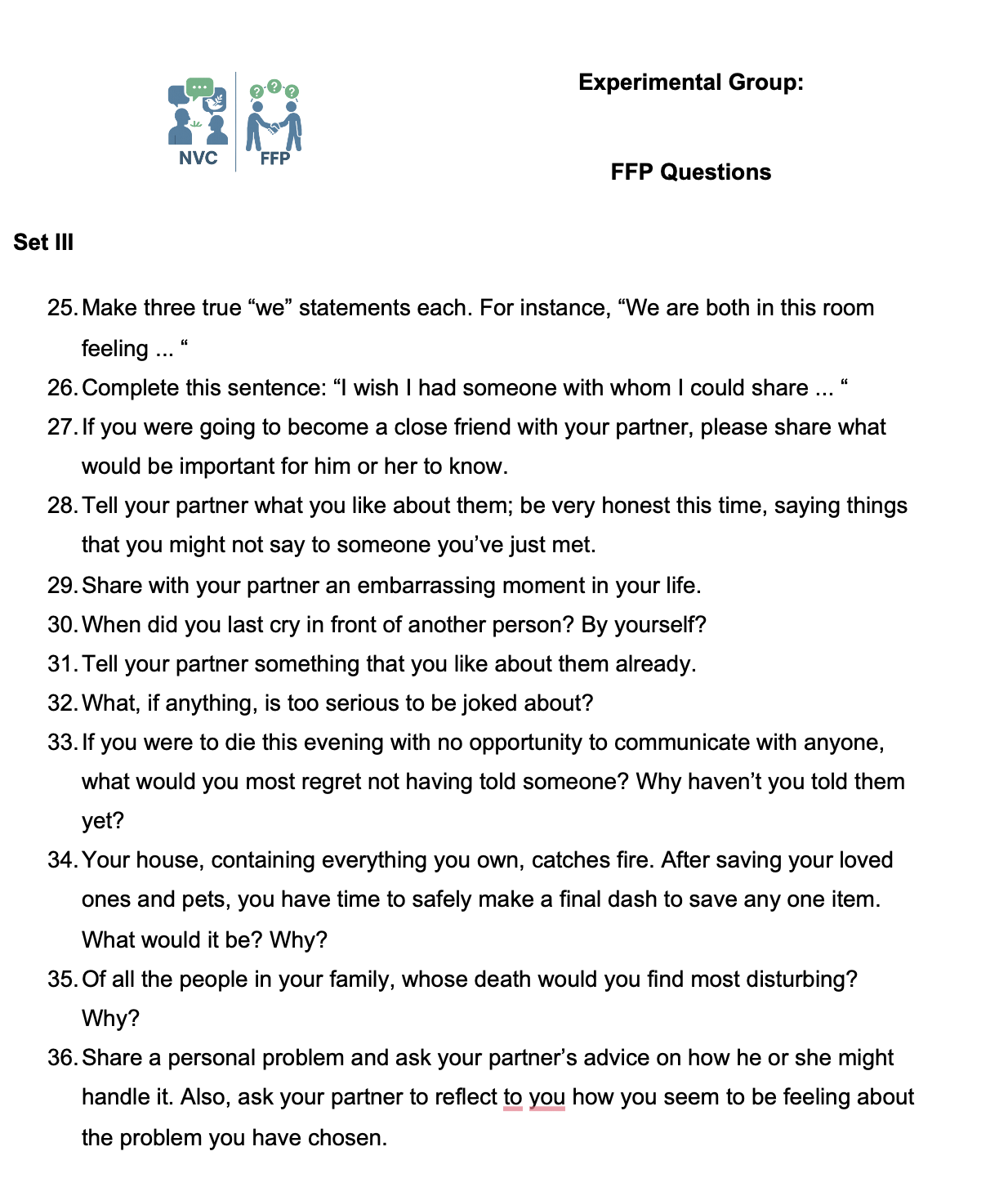
This experiment evaluates a brief, NVC‑informed Fast Friends Procedure that aims to increase interpersonal closeness, conversational flow, belonging, and reduce social interaction anxiety among newly paired international–domestic student dyads at VIVES by combining 15 minutes of Nonviolent Communication skills training with a 45‑minute, three‑set series of escalating self‑disclosure prompts; a time‑ and format‑matched structured small‑talk activity serves as the active control to isolate effects of depth and skills training from mere social contact and turn‑taking structure.
Creative Commons Attribution (CC BY)
Aron 1997
https://journals.sagepub.com/doi/10.1177/0146167297234003
Built with Questionnaire Builder 2
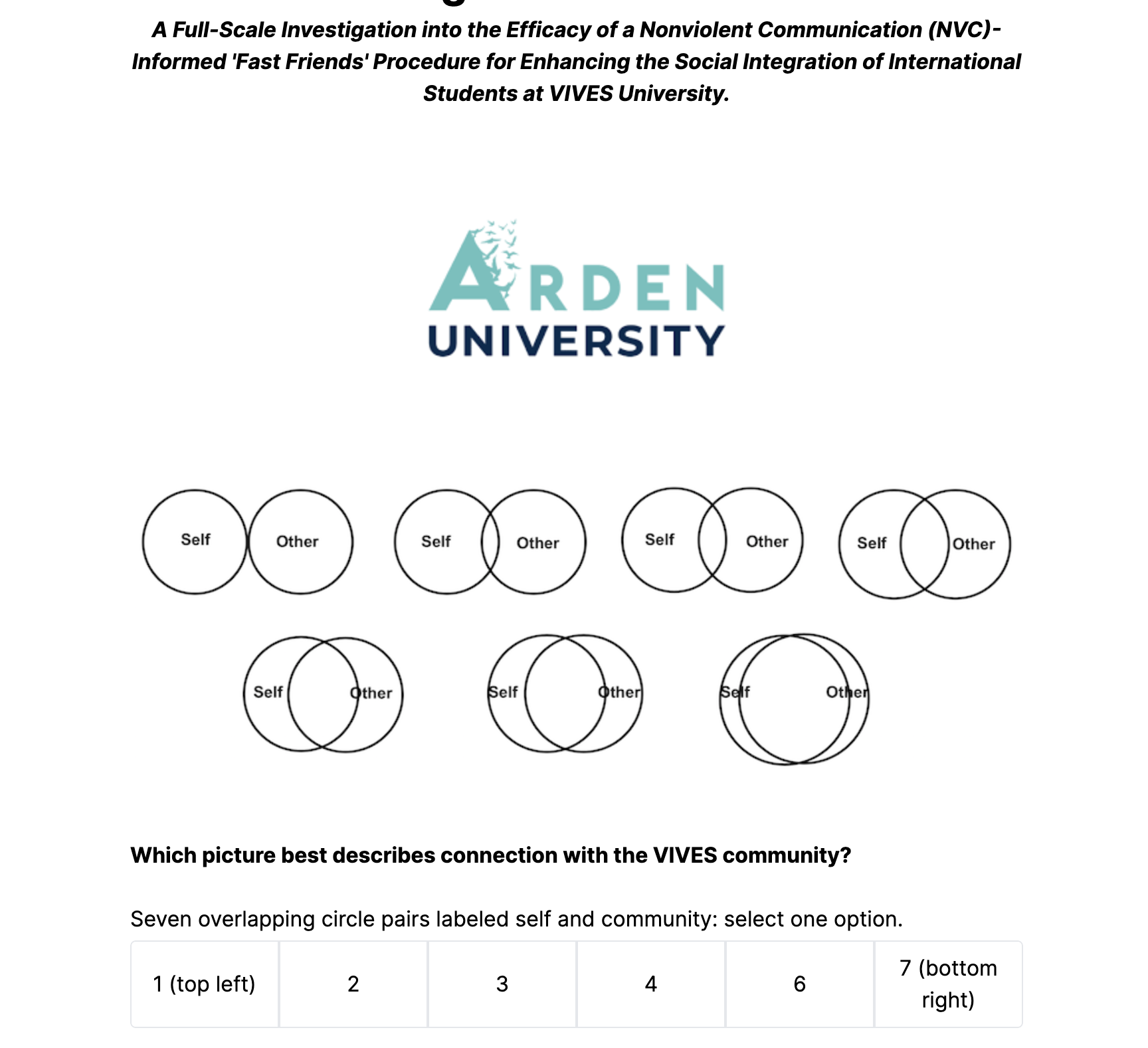
The Inclusion of Community in Self (ICS) is a single‑item, pictorial measure of felt closeness to a target community; respondents choose one of seven pairs of overlapping circles labeled “Self” and “Community,” with greater overlap indicating stronger inclusion/identification with that community (score 1–7).
Purpose and construct
Stimulus and response format
Administration and timing
Scoring and use
Creative Commons Attribution-NonCommercial (CC BY-NC)
Mashek D.
https://doi.org/10.1002/jcop.20146
Built with Questionnaire Builder 2
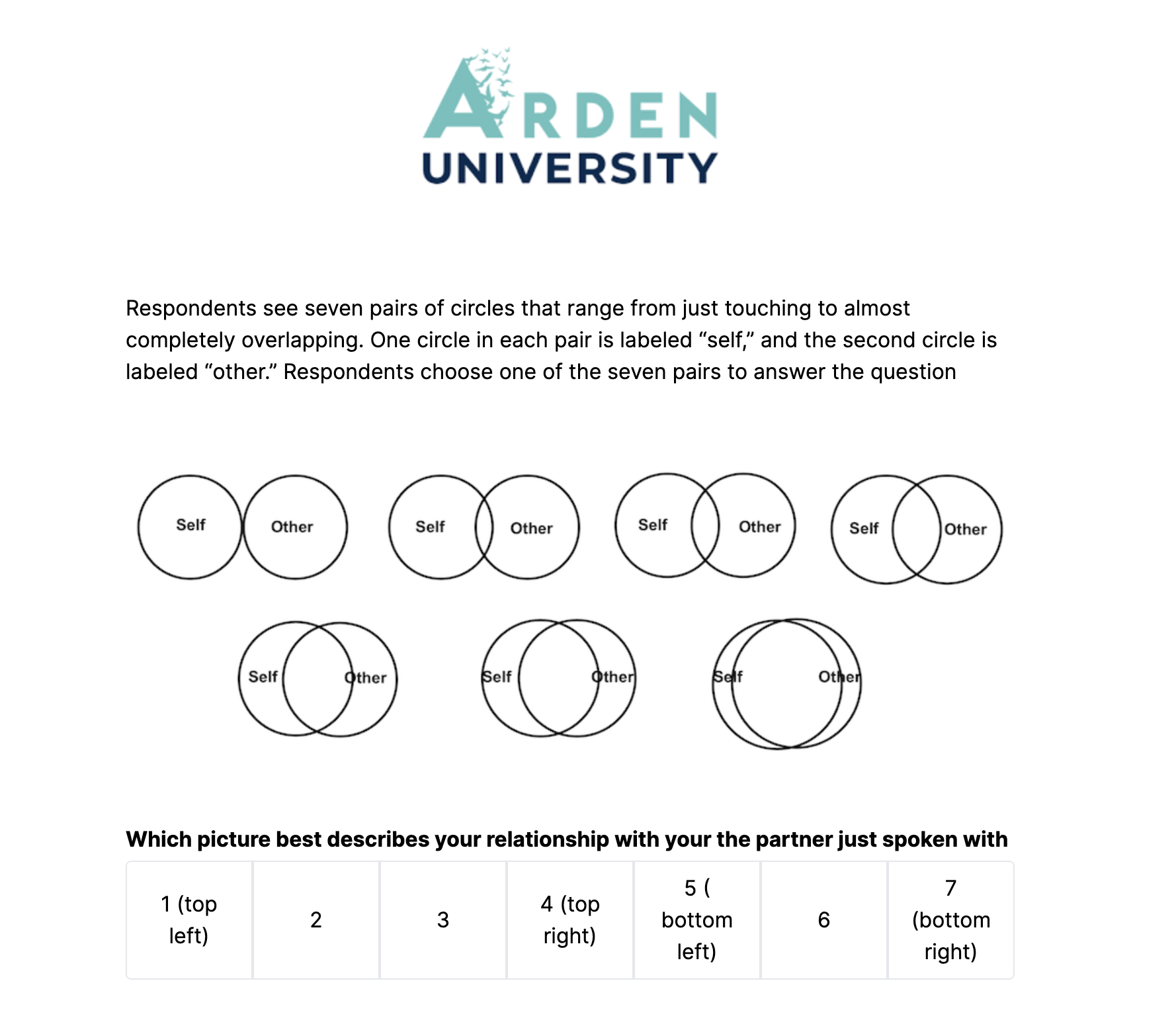
The Inclusion of Other in the Self (IOS) is a one‑item, pictorial measure of perceived interpersonal closeness that asks participants to select one of seven overlapping “self–other” Venn‑style circle pairs to represent how close they feel to another person or group, with higher overlap indicating greater closeness.
Overview
What it measures: IOS indexes the subjective sense of interconnectedness or overlap between self and another target (e.g., a specific partner, a peer, or a community), and is widely used as a proximal outcome after brief interactions and as a concise indicator of relationship closeness.
Stimulus/response format: Respondents view seven pairs of circles labeled “Self” and “Other,” increasing in overlap from 1 (no overlap) to 7 (almost complete overlap), and choose the image that best reflects their relationship; the choice is recorded as a 1–7 score.
Administration time: Typically under 30 seconds; often placed first in batteries to minimize priming and capture immediate dyadic closeness.
Use cases
Dyadic interventions: Commonly collected immediately after structured interactions like the Fast Friends Procedure to detect changes in perceived closeness between partners.
Community belonging: An adapted variant, the Inclusion of Community in Self (ICS), replaces “Other” with “Community” (e.g., campus), enabling ultra‑brief assessment of inclusion at a collective level.
Psychometrics
Reliability/validity: Despite its brevity, IOS shows robust convergent validity with longer intimacy/closeness scales and acceptable test–retest reliability in prior evaluations; its nonverbal format helps reduce language burden in cross‑cultural samples.
Sensitivity: IOS is sensitive to short‑term manipulations of closeness in laboratory and field settings, which is why it is frequently used immediately post‑interaction.
Administration guidance
Prompting: Frame the item to the intended target (e.g., “How close do you feel to the partner you just spoke with?” or “How close do you feel to the VIVES community?”), keeping instructions neutral and brief.
Ordering: Place IOS first on post‑interaction pages to avoid construct carryover from affective or evaluative items.
Creative Commons Attribution (CC BY)
Aron, A., Aron, E. N., & Smollan, D. (1992).
https://sparqtools.org/mobility-measure/inclusion-of-other-in-the-self-ios-scale/
Built with Questionnaire Builder 2
The Psychological Sense of School Membership (PSSM) is a self-report questionnaire that measures students’ perceived belonging at school or university, including feeling accepted, valued, respected, and included as part of the academic community. It typically uses 18 Likert‑type items (1–5) covering facets like teacher acceptance, peer support, and perceived inclusion, producing a mean score where higher values indicate stronger institutional belonging.
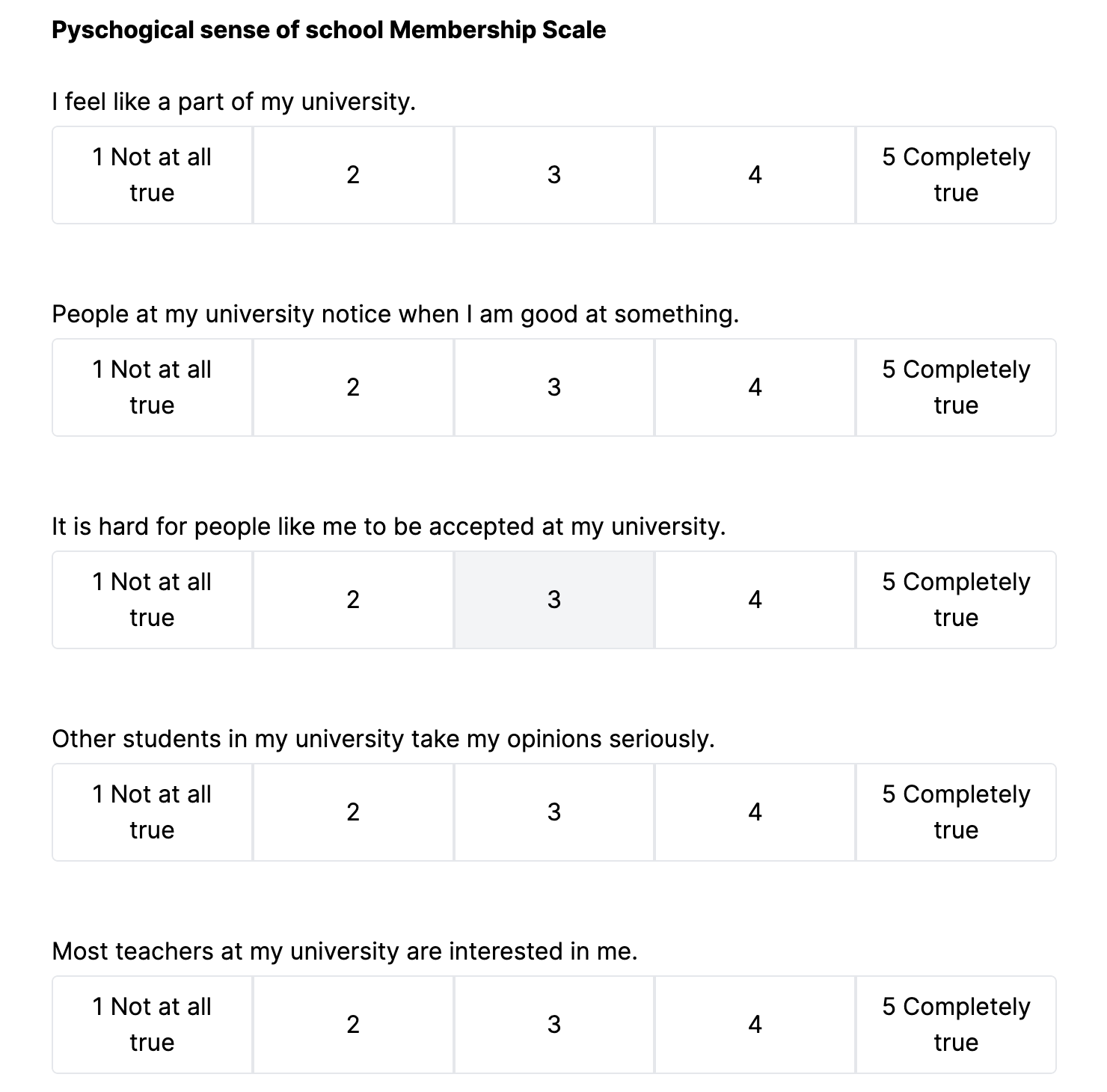
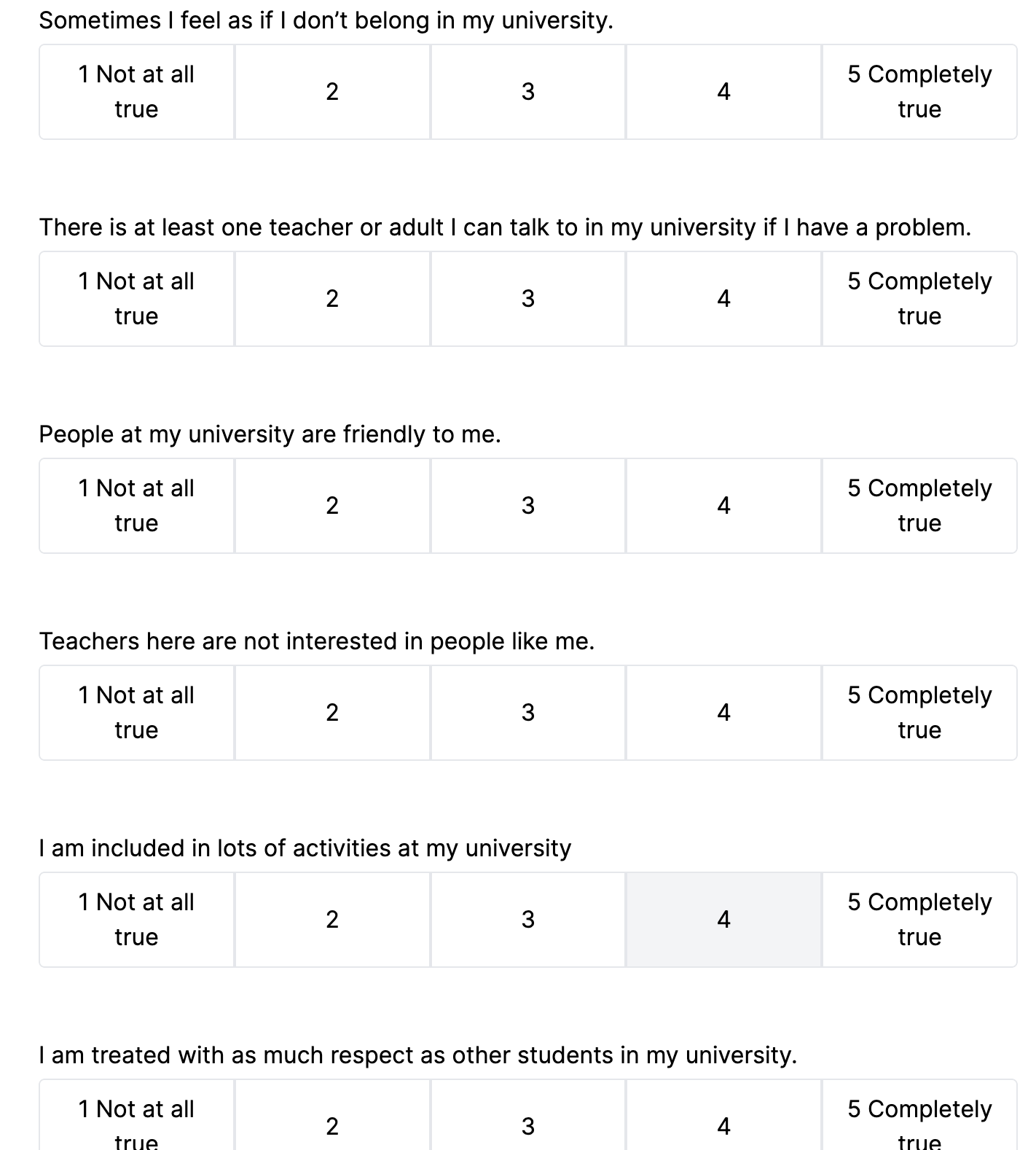
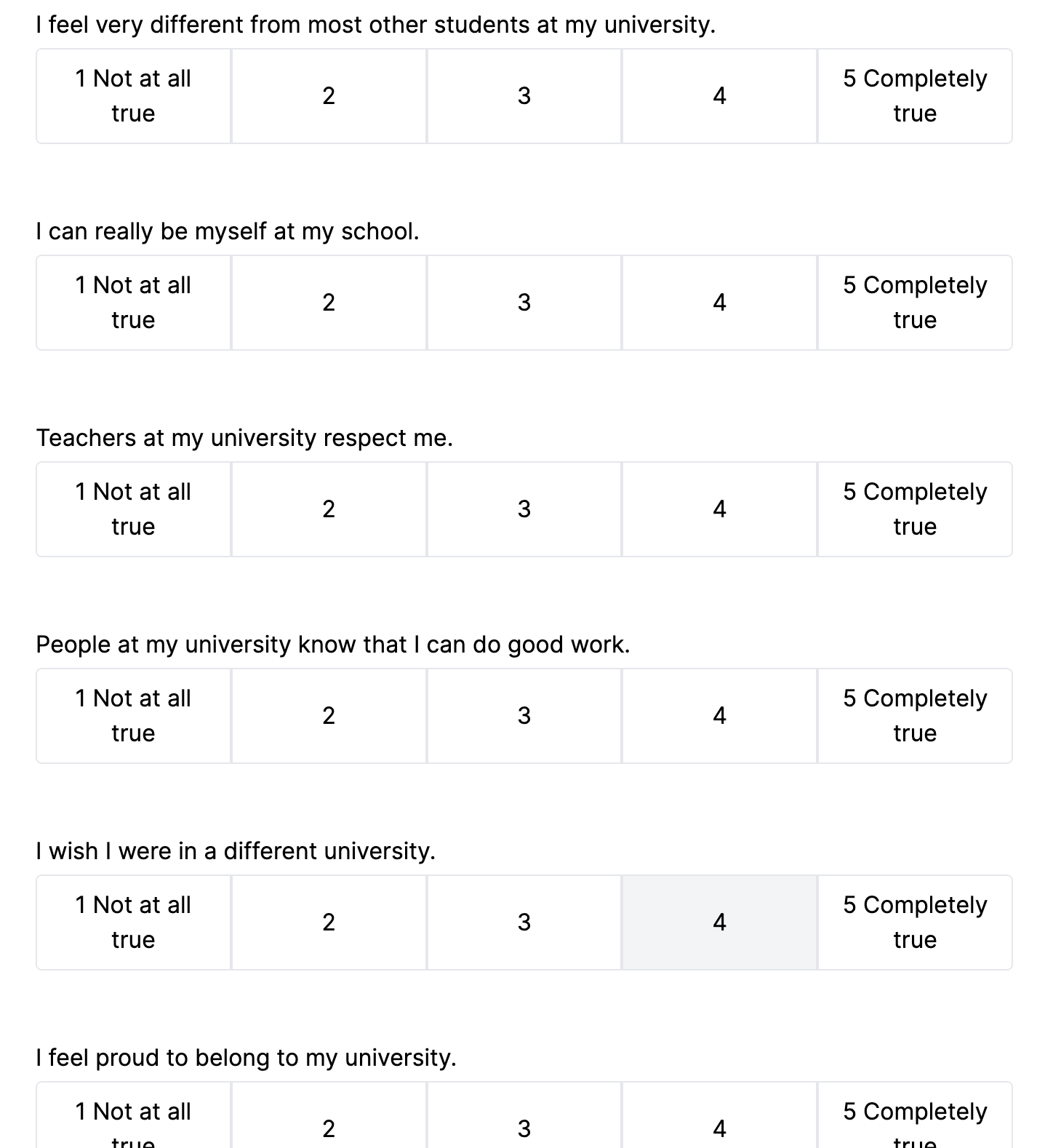
Creative Commons Attribution (CC BY)
Goodenow C. (1993)
https://bibliotecadigital.mineduc.cl/bitstream/handle/20.500.12365/17469/goodenow1993.pdf?sequence=1&isAllowed=y
Built with Questionnaire Builder 2
The SIAS-6 is a brief, 6‑item self-report measure of social interaction anxiety that asks respondents how characteristic certain interaction-related difficulties are of them, rated 0–4 and summed or averaged, with higher scores indicating greater anxiety in face‑to‑face social situations rather than performance contexts
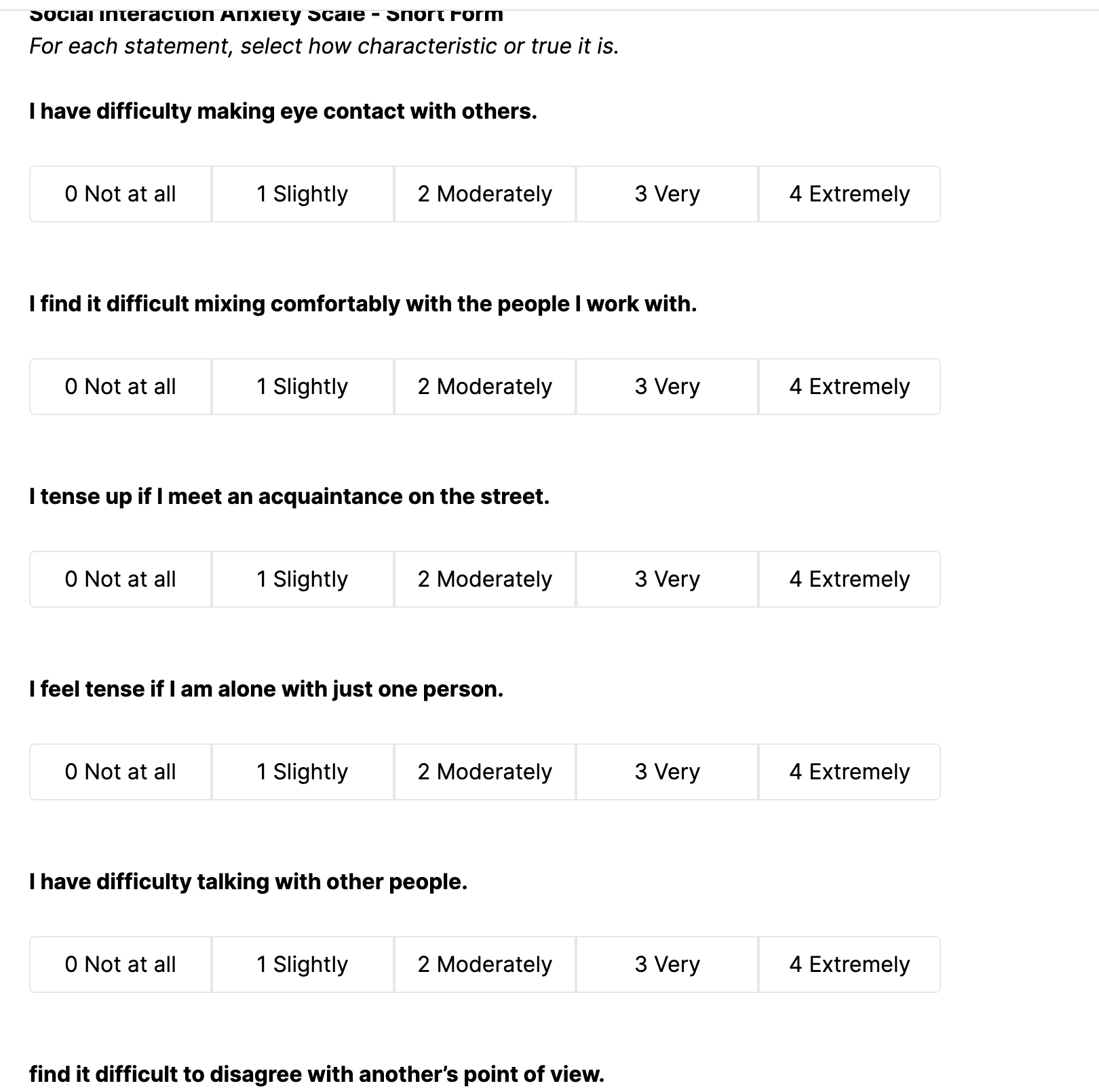
Creative Commons Attribution (CC BY)
Peters L. (2011)
https://pubmed.ncbi.nlm.nih.gov/21744971/
Built with Questionnaire Builder 2
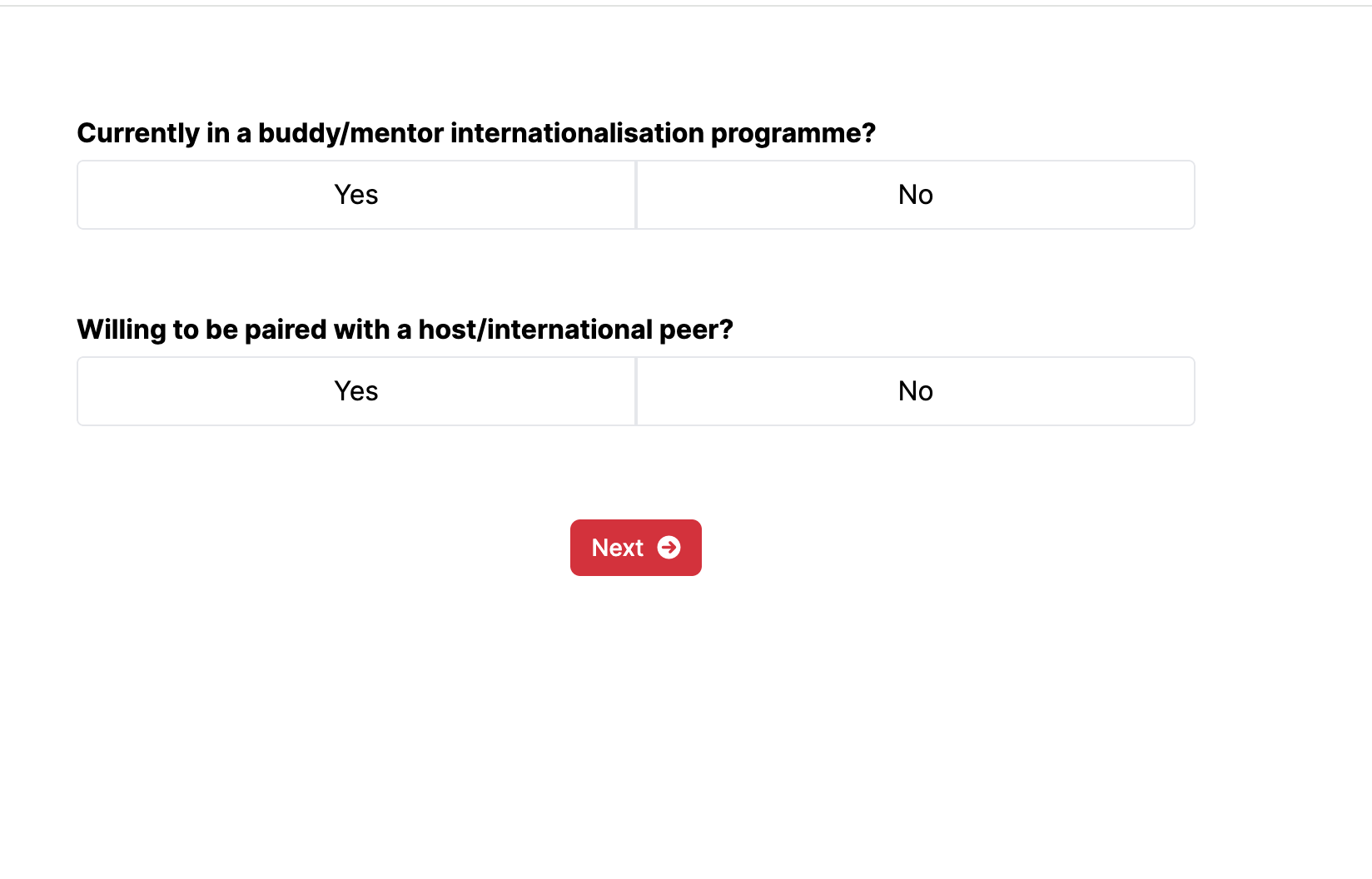
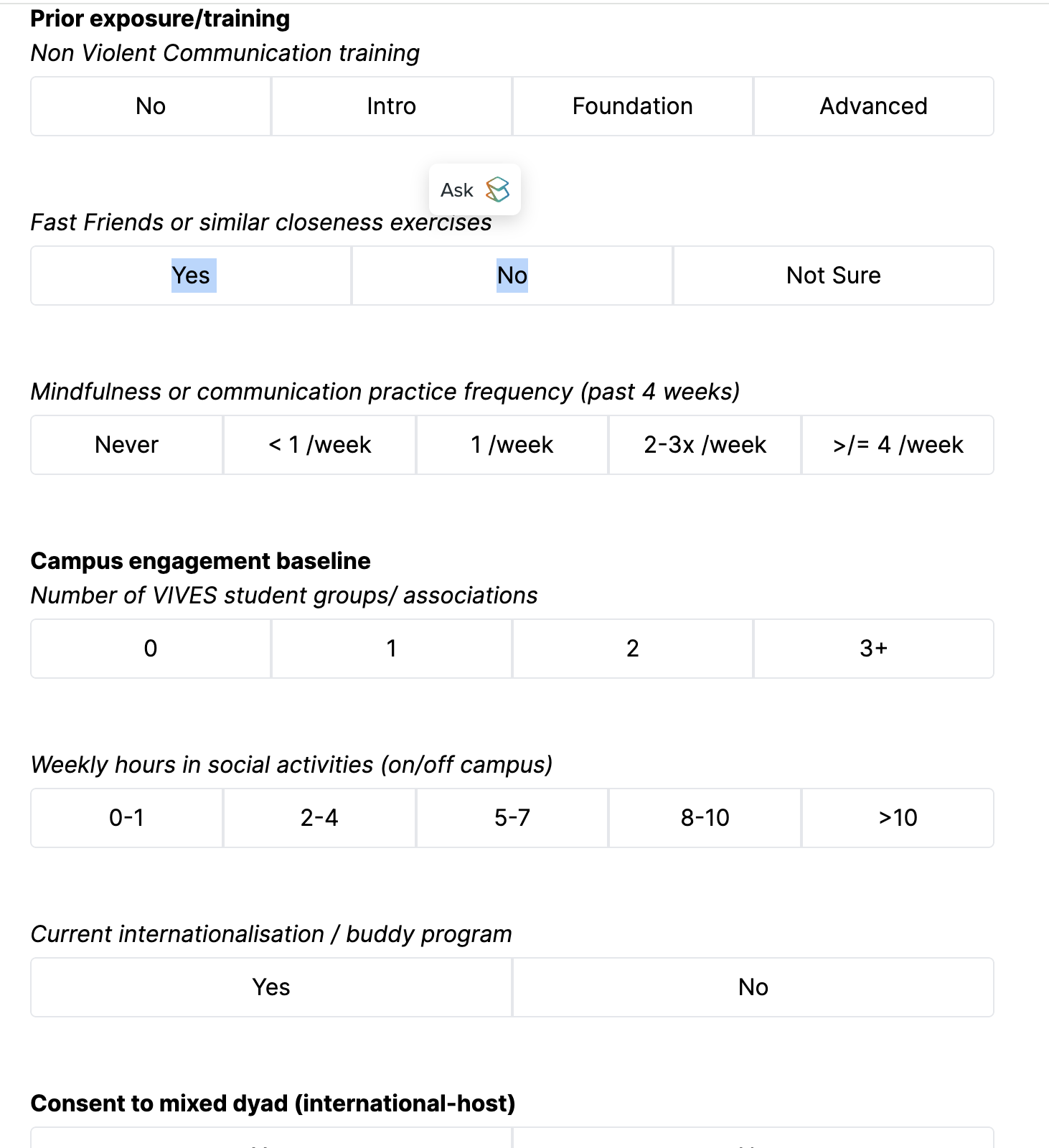
The T0 questionnaire is a brief, digital baseline battery that measures core psychosocial constructs prior to the campus dyadic session: interpersonal closeness, social interaction anxiety, institutional belonging, and general inclusion in the VIVES community, using validated scales with minimal burden and fixed order to reduce priming effects. Participants view one-item pictorial closeness stimuli (IOS and ICS), rate six short items on social interaction anxiety (SIAS‑6), and complete the 18‑item PSSM for sense of school membership, alongside concise demographics and small covariate items (e.g., prior NVC/mindfulness exposure) for balance and analysis control.
Creative Commons Attribution-NonCommercial (CC BY-NC)
Built with Questionnaire Builder 2
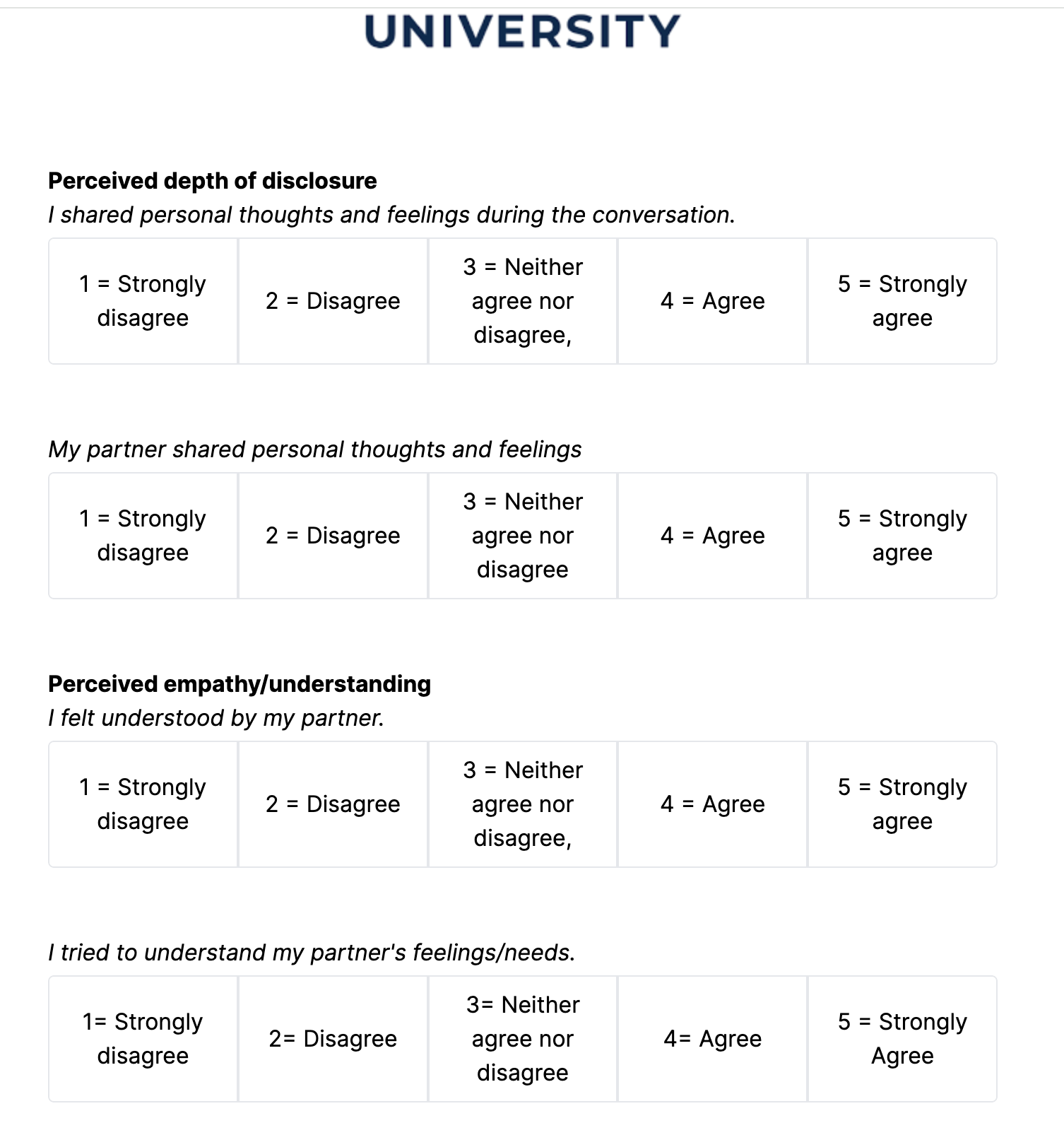
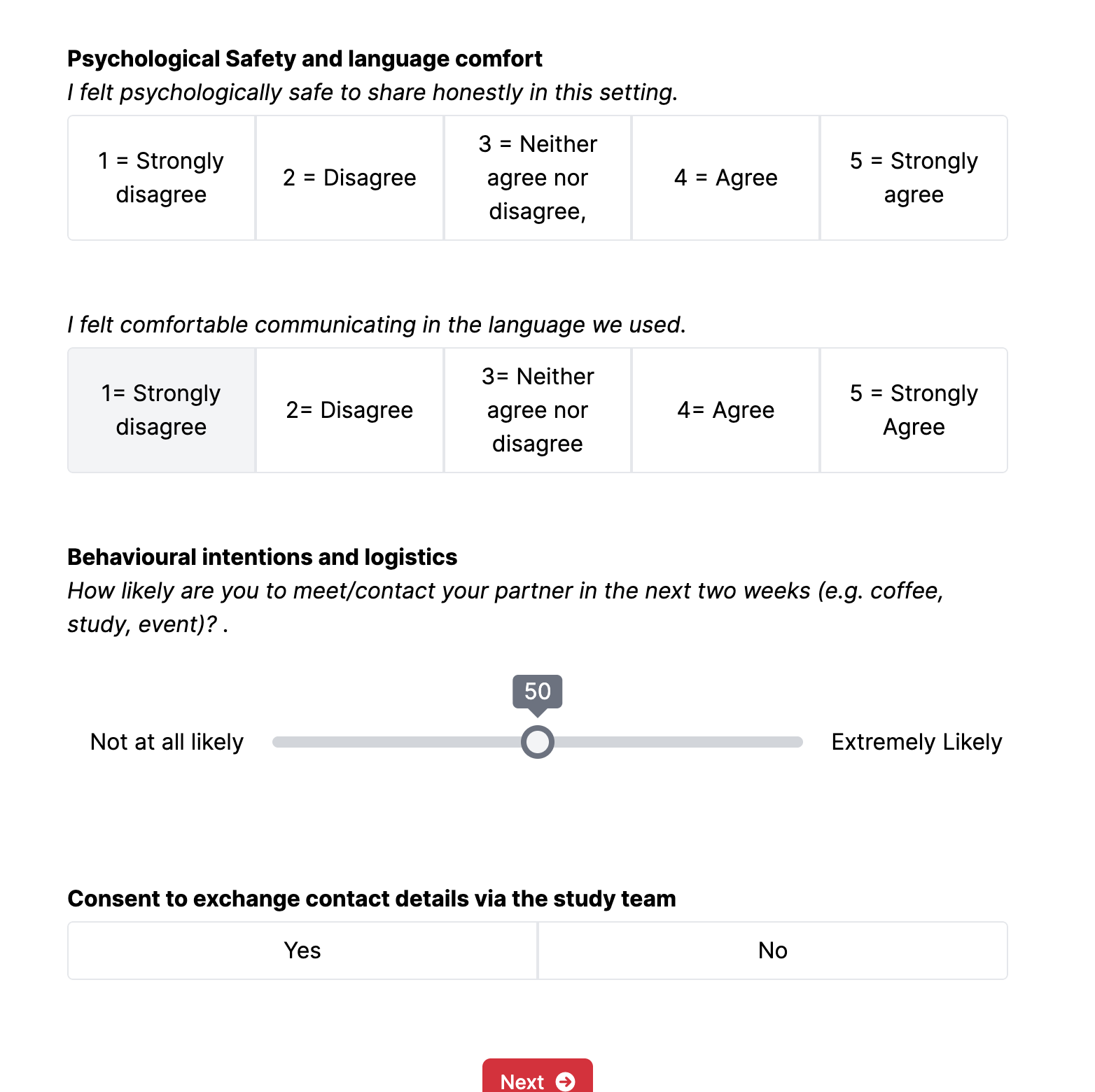
T1 is a brief, mobile post‑interaction questionnaire that measures immediate dyadic closeness, social interaction anxiety, and institutional belonging after the session, plus manipulation/process checks and reconnection intentions, using validated scales and concise Likert items; it is research‑only and should be administered immediately after the experimental activity to capture proximal effects while minimizing burden.
Creative Commons Attribution-NonCommercial (CC BY-NC)
Built with Questionnaire Builder 2
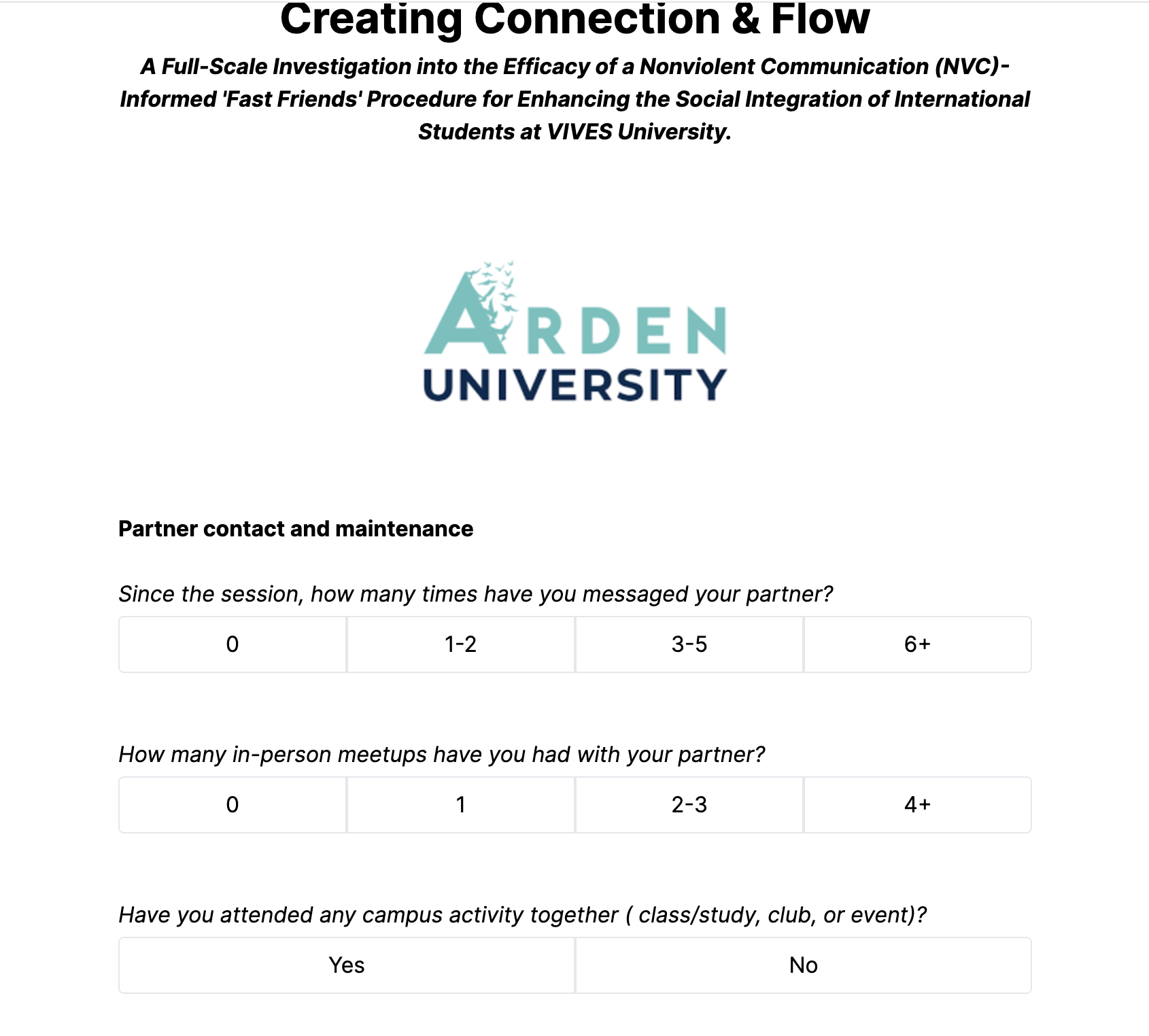
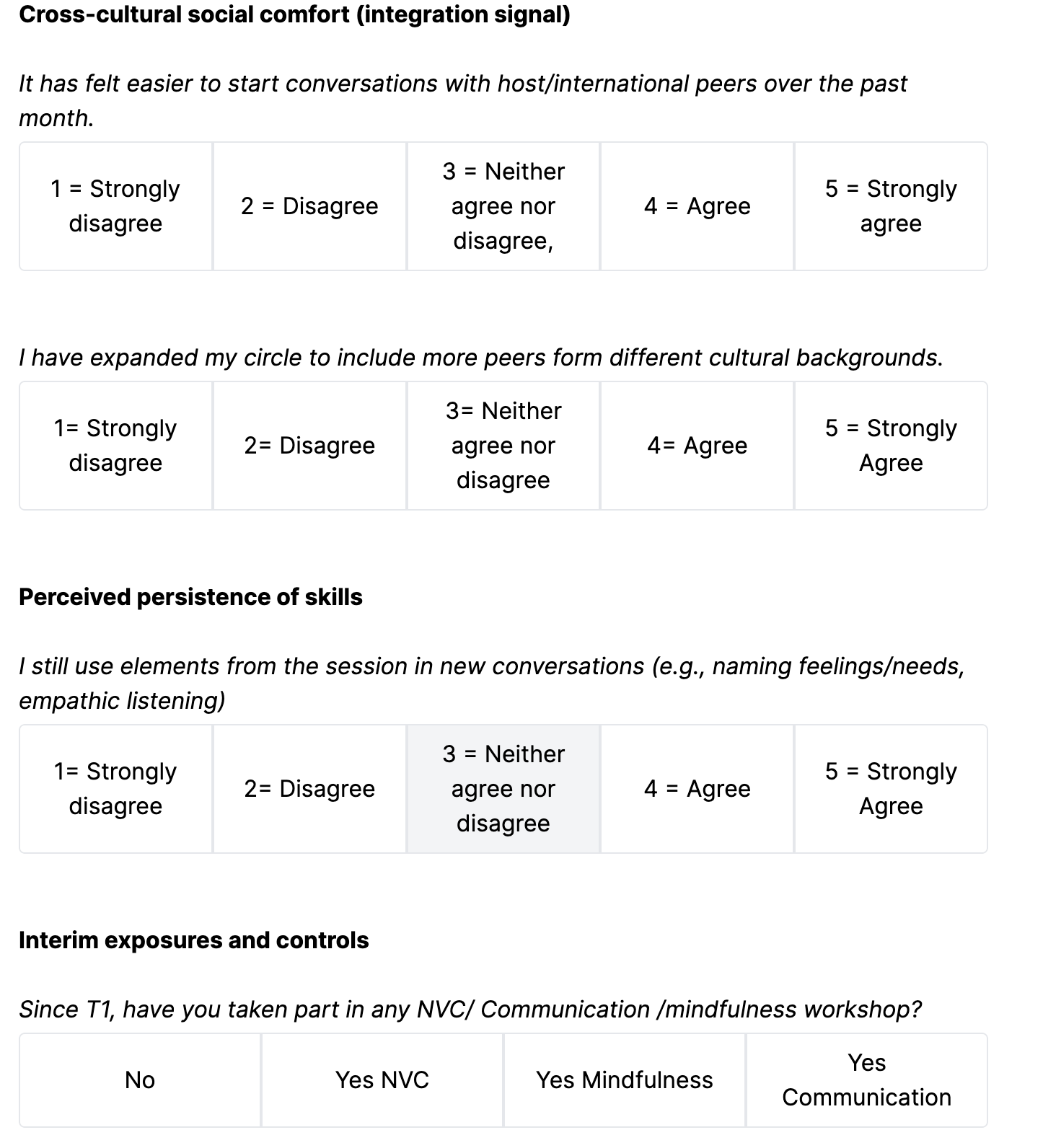
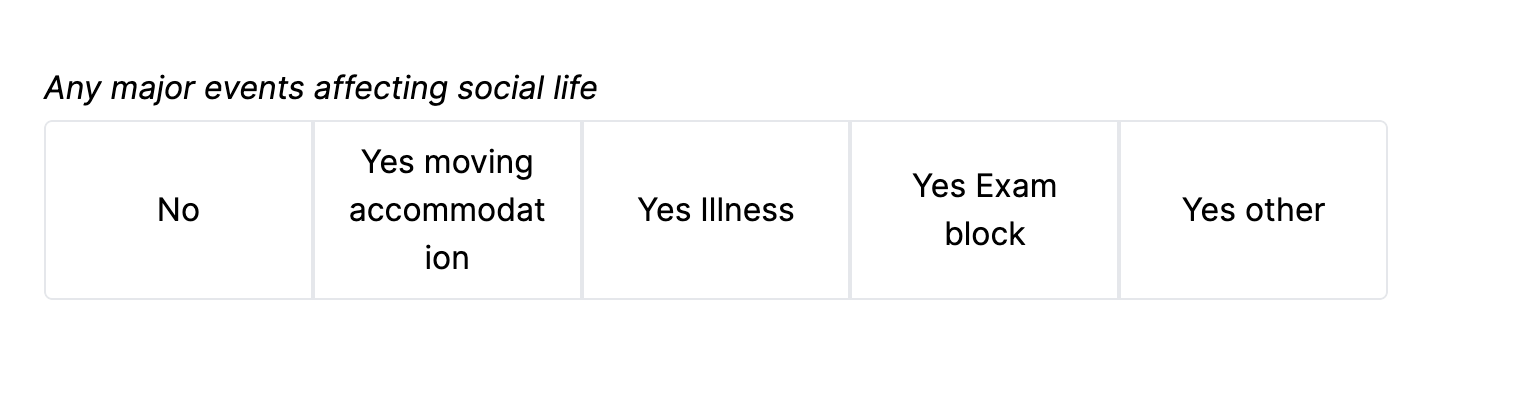
The T2 questionnaire is a brief follow‑up battery that assesses sustained dyadic closeness, social interaction anxiety, institutional belonging, and perceived inclusion in the wider campus community, along with compact behavioral and process indicators of maintenance and exposure over the four weeks after the intervention session. It uses the same validated core scales as earlier waves to enable change analyses (IOS, SIAS‑6, PSSM, plus a one‑item ICS), and adds short items on contact frequency, cross‑cultural social comfort, skill persistence, and interim exposures/events to contextualize maintenance effects while keeping total completion time to about 6–8 minutes on mobile devices.
Fully open! Access by URL and searchable from the Open Materials search page