Supporting material for the OSF Project: https://osf.io/anhj3/?view_only=877639f21587450f83dad3ec43a22fe3
Built with Experiment
We conducted three pilot studies that serve not only for the current experiment, but also for the upcoming:
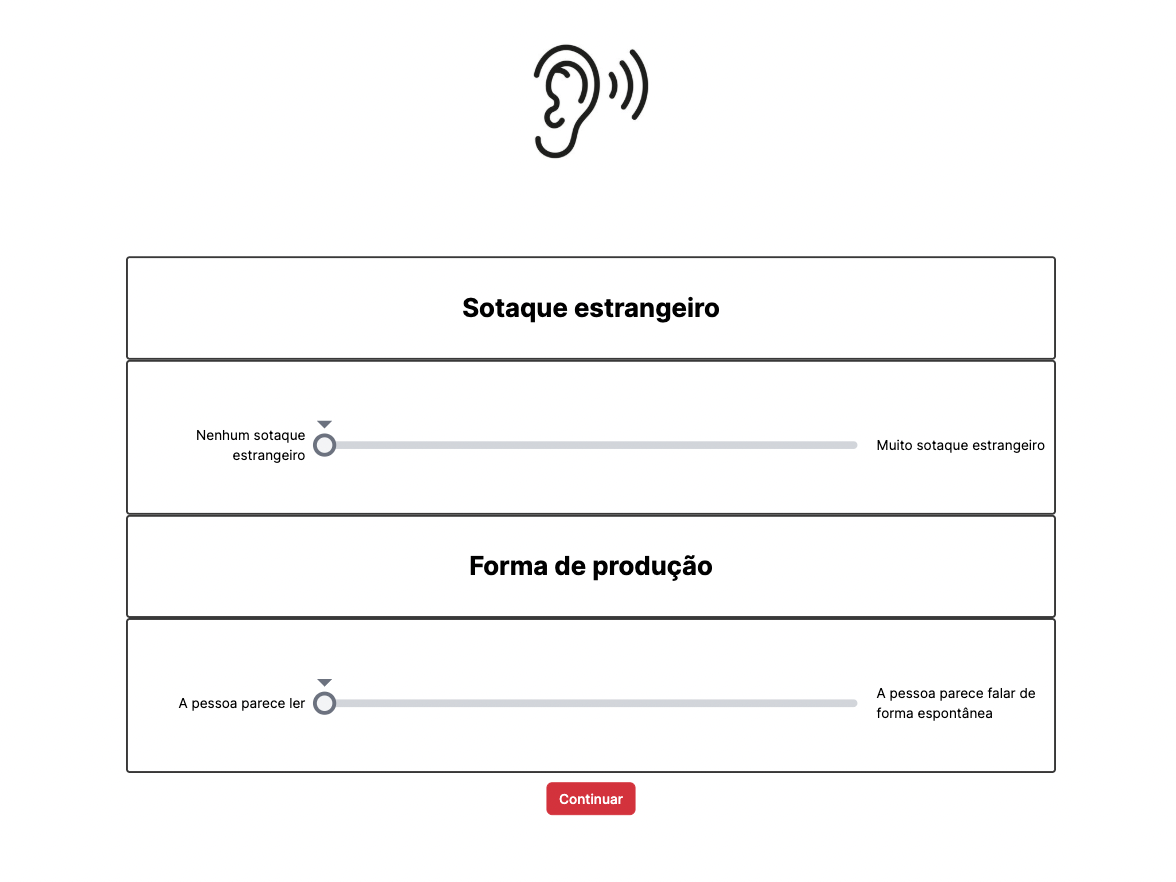
In the first pilot study, native European Portuguese speakers rated the uterances on the degree of target-likeness: target-like (TL) vs. NTL (non-target-like) on a slider scale from 0 to 100, where 0 was no foreign accent and 100 — very strong foreign accent , and the manner of production, where 0 was the person seems to read and 100 — the person seems to speak spontaneously (approx. 15 minutes)
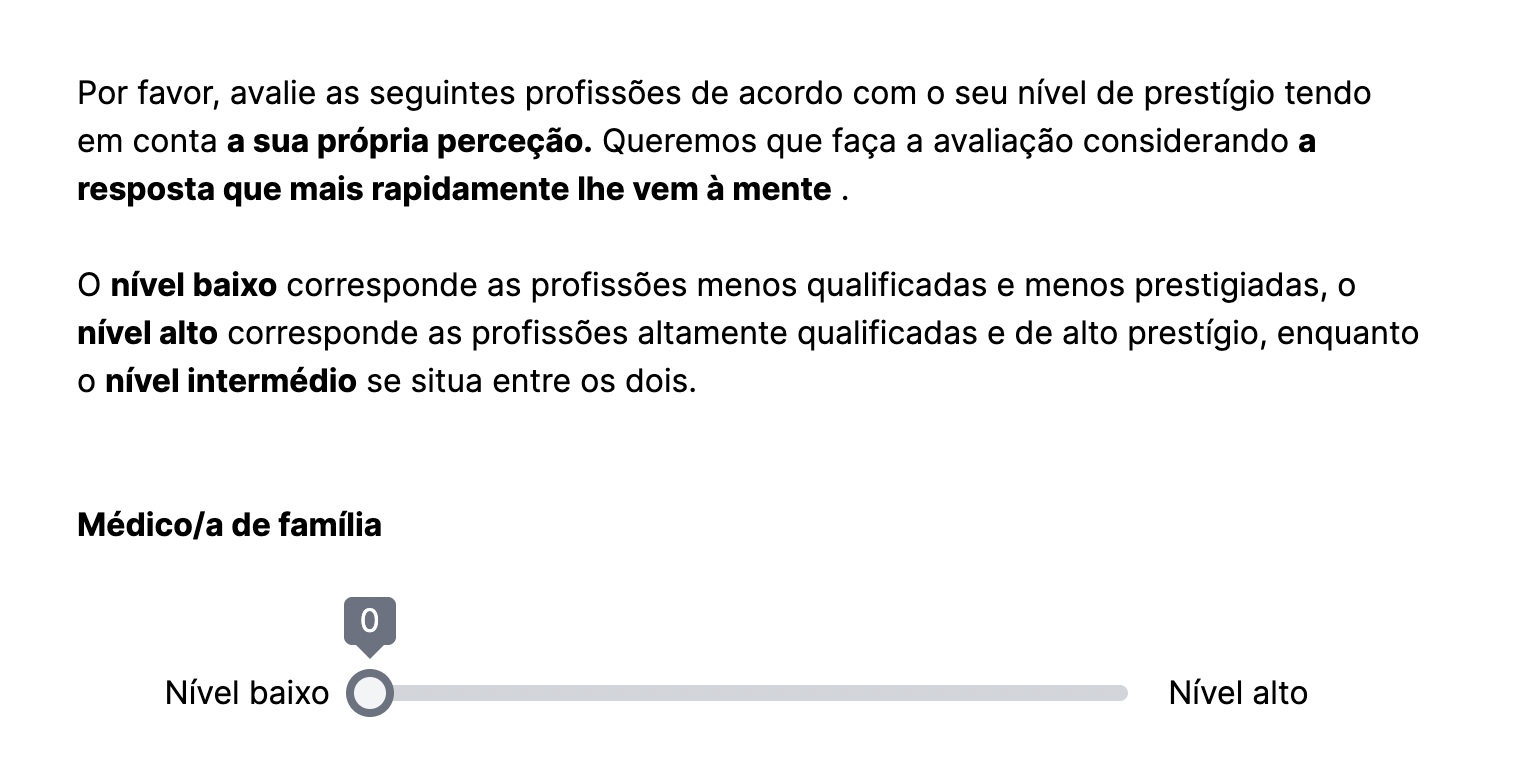
In the second pilot study, the same participants rated a list of profession according to their prestige (5 min)
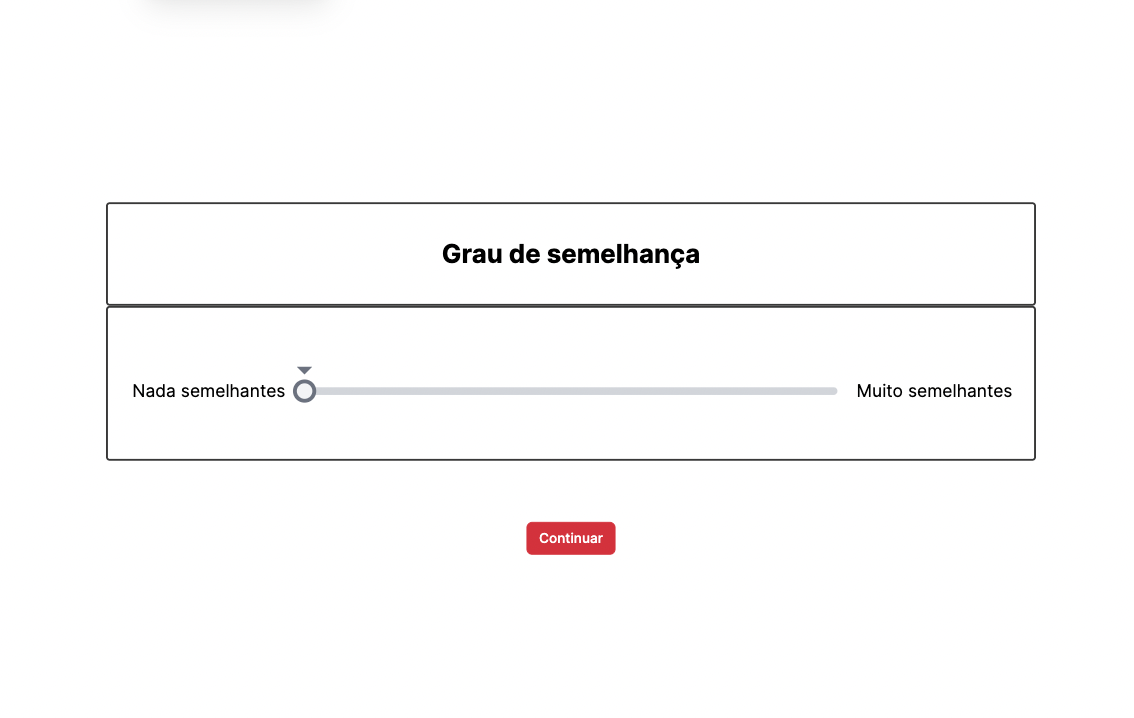
In the third and last pilot study, the participants rated a series of utterances on their similarity, in pairs (45 min), on a slider scale from 0 to 100, where 0 was not similar and 100 — very similar
At the end, they were asked to fill in a brief sociolinguistic questionnaire.
Creative Commons Attribution (CC BY)
Built with Experiment
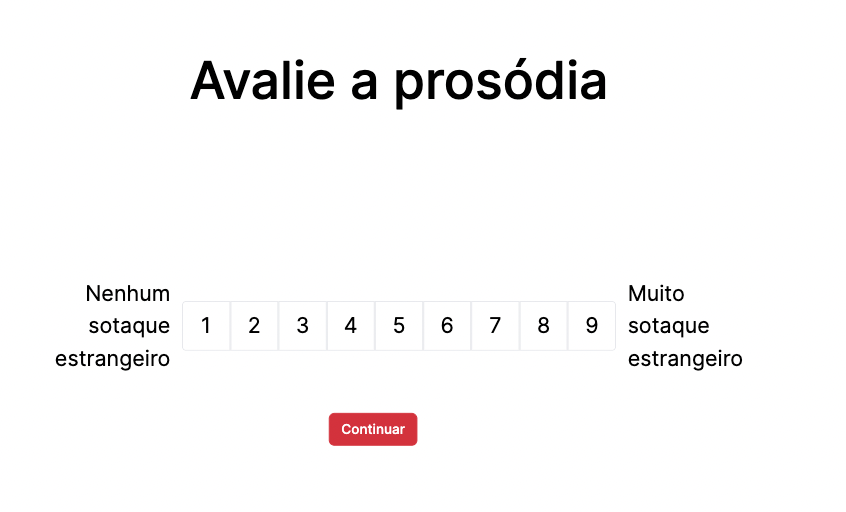
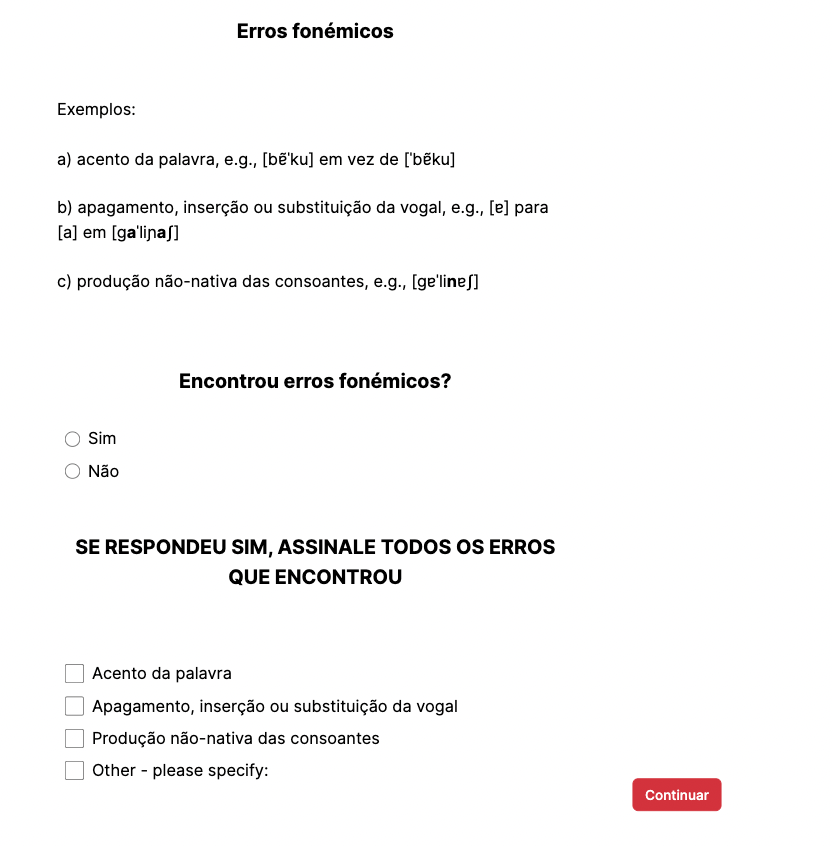
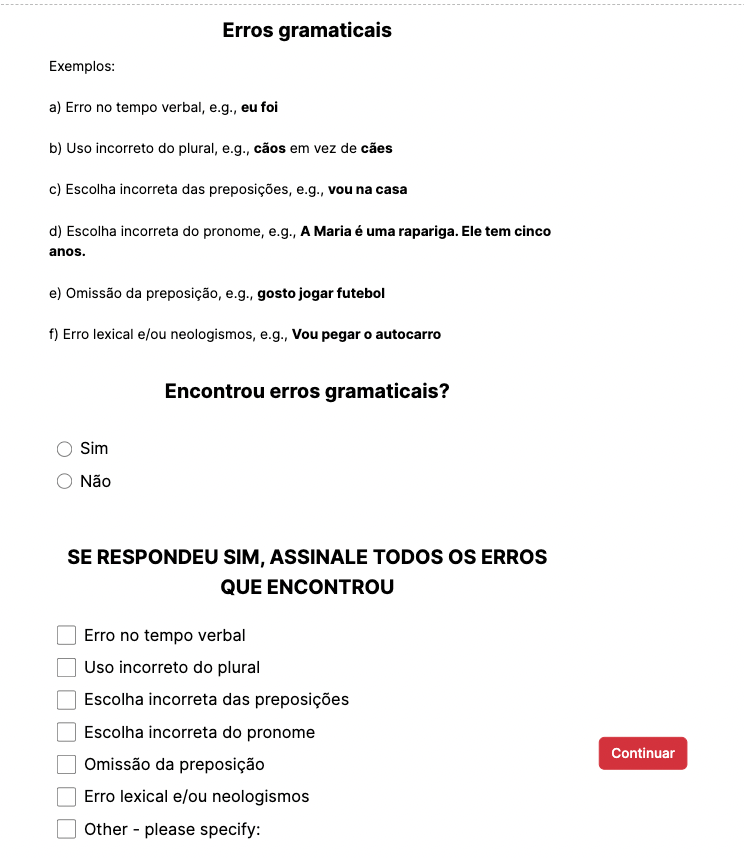
In this study, two experienced linguists — native monolingual speakers of European Portuguese — rated the utterances on the goodness of prosody (in pairs), on a Likert scale from 1 to 9, where 1 was no foreign accent and 9 — very strong foreign accent. They also coded the utterances for grammatical and phonemic errors.
Creative Commons Attribution (CC BY)
Built with Experiment
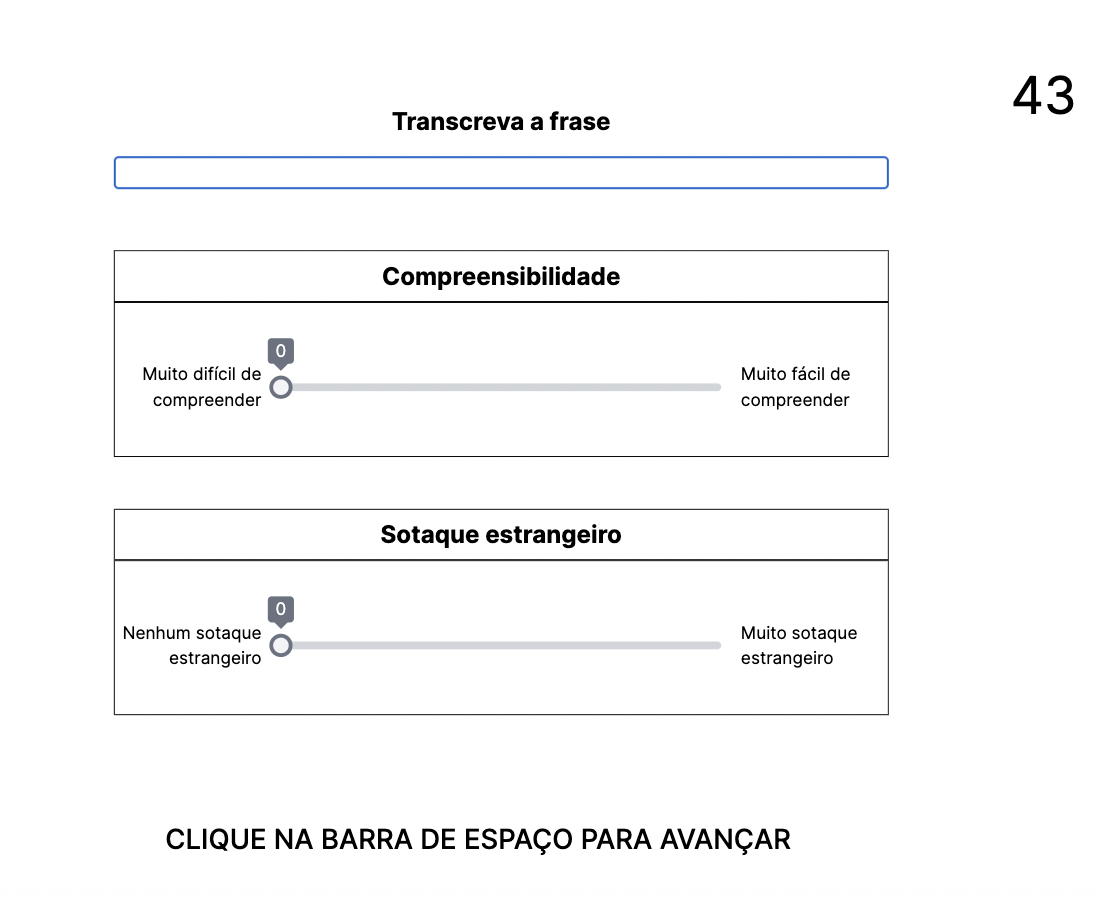
Piloting the main study for accentedness, comprehensibility, and intelligibility.
The raters were asked to transcribe the utterance in a special field for intelligibility and rate on a 100-point slider scale for comprehensibility and accentedness, in this order.
For comprehensibility: 0 — very difficult to understand; 100 — very easy to understand
For accentedness: 0 — no foreign accent; 100 — very strong foreign accent
Creative Commons Attribution (CC BY)
Built with Experiment
Final rating study.
Creative Commons Attribution (CC BY)
Fully open! Access by URL and searchable from the Open Materials search page